
Choosing the right doors can dramatically improve the appearance, functionality, and value of your home. Among the many options available, french doors remain one of the most popular choices for homeowners who want to combine elegance with practicality. Their timeless design, large glass panels, and ability to bring in natural light make them suitable for both modern and traditional homes.
Whether you’re renovating your living room, upgrading your patio entrance, or adding style to an interior space, it offers an excellent balance of beauty and performance. They create a seamless connection between rooms or between indoor and outdoor spaces while making your home feel brighter and more open.
What Are French Doors?
It is a pair of hinged doors that typically feature large glass panels extending through most of the door surface. Unlike solid doors, they are designed to maximize natural light while maintaining a physical separation between spaces.
Originally developed in France during the Renaissance, these doors became popular because they allowed more sunlight into homes before electric lighting existed. Their symmetrical appearance and elegant design quickly spread throughout Europe and later around the world.
Key Features
- Large glass panels for maximum daylight
- Hinged design with inward or outward opening options
- Available for both interior and exterior spaces
- Wide variety of frame materials
- Excellent ventilation when both doors are open
- Elegant appearance that complements many architectural styles
Benefits of French Doors
It is more than just an attractive design feature. They provide practical advantages that improve comfort, functionality, and property value.
Increased Natural Light
One of the biggest reasons homeowners choose it is their ability to brighten interior spaces. Large glass panels allow sunlight to flow freely between rooms or from outside, reducing the need for artificial lighting during the day.
Elegant and Timeless Style
It has remained popular for centuries because they blend beautifully with almost any home style. Whether your home has a modern, farmhouse, colonial, or traditional design, these doors add sophistication without overwhelming the space.
Better Indoor-Outdoor Living
Exterior it creates a smooth transition between your home’s interior and outdoor spaces such as patios, decks, balconies, or gardens. When both doors are open, the wide entrance encourages airflow and creates an open, welcoming atmosphere that’s perfect for entertaining guests.
Improved Home Value
Quality door upgrades often increase a property’s curb appeal and resale value. Buyers appreciate homes with attractive, energy-efficient entryways, making French doors a worthwhile long-term investment.
Enhanced Ventilation
Unlike sliding doors that only partially open, traditionally it allows the entire doorway to open. This improves airflow throughout the home and helps maintain a fresh indoor environment during pleasant weather.
Flexible Design Choices
Modern manufacturers offer countless customization options, including:
- Different frame materials
- Decorative glass patterns
- Various paint and stain finishes
- Multiple hardware styles
- Energy-efficient glazing
- Custom sizes
Types of French Doors
Not every French door is designed for the same purpose. Understanding the available options will help you select the right model for your project.
Interior French Door
Interior French door are commonly used to separate living rooms, dining rooms, home offices, and bedrooms while maintaining an open visual connection. Because they allow light to pass between rooms, they create a spacious feel without sacrificing privacy.
Exterior French Door
Exterior models are built with durable materials, insulated glass, weather-resistant seals, and advanced locking systems. They are ideal for patios, gardens, balconies, and backyard entrances where both beauty and security are important.
Patio French Door
Patio French doors connect indoor living spaces with outdoor entertaining areas. Many homeowners choose these doors because they provide wide access for family gatherings while offering attractive views of the landscape.
Hinged French Door
This is the traditional design where both door panels swing open from the center. Hinged models provide a classic appearance and allow the entire opening to be used.
Sliding French Door
Sliding French doors combine the appearance of classic it with the space-saving convenience of sliding operation. Instead of swinging open, one panel slides behind the other, making them an excellent choice for rooms where floor space is limited.
Single French Door
Single-panel is perfect for smaller openings or interior applications where a full double-door system isn’t necessary. Despite their compact size, they still offer the elegant appearance and natural light associated with traditional it.
Double French Door
Double it remains the most recognizable style. Both panels open from the center, creating a wide entrance that enhances accessibility, ventilation, and visual appeal. They are especially popular for patios, formal dining rooms, and grand entryways.
French Door Materials Compared
The material you choose has a significant impact on the appearance, durability, maintenance, energy efficiency, and cost of your doors. Understanding the strengths and weaknesses of each option will help you make a smart investment that fits both your budget and lifestyle.
Wood French Doors
Wood is a timeless choice known for its natural beauty and excellent insulation. It complements traditional, farmhouse, and luxury homes while offering endless customization through paint or stain.
Pros
- Elegant, premium appearance
- Excellent insulation
- Highly customizable
- Long-lasting with proper care
Cons
- Higher purchase price
- Requires regular maintenance
- Can warp or swell if exposed to excessive moisture
Fiberglass French Doors
Fiberglass has become one of the most popular materials because it combines durability with low maintenance. It can even mimic the appearance of real wood while resisting weather damage.
Pros
- Resistant to dents, rot, and rust
- Excellent energy efficiency
- Minimal maintenance
- Suitable for harsh climates
Cons
- More expensive than vinyl
- Limited repair options if severely damaged
Steel French Door
Steel offers exceptional strength and security, making it a preferred choice for exterior entrances.
Pros
- Outstanding security
- Durable construction
- Fire resistant
- Low maintenance
Cons
- Can dent under heavy impact
- May rust if protective coatings are damaged
- Fewer decorative design options
Vinyl French Doors
Vinyl is an affordable option that performs well in many climates. It is especially attractive for homeowners seeking a balance between cost and efficiency.
Pros
- Budget-friendly
- Energy efficient
- Easy to clean
- Resistant to moisture
Cons
- Fewer color choices
- Cannot be refinished
- Less premium appearance than wood
Aluminum French Door
Aluminum frames are slim, modern, and highly durable. They are commonly used in contemporary homes with large glass panels.
Pros
- Lightweight yet strong
- Corrosion resistant
- Modern appearance
- Supports larger glass areas
Cons
- Conducts heat more easily than other materials
- Typically more expensive than vinyl
Composite French Doors
Composite doors combine several materials to deliver excellent durability, insulation, and weather resistance.
Pros
- Very durable
- Low maintenance
- Strong insulation
- Long lifespan
Cons
- Higher initial investment
- Fewer customization options than solid wood
French Door Glass Options
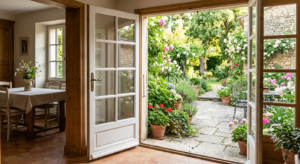
Glass plays an important role in appearance, privacy, energy efficiency, and safety. Modern technology provides several choices depending on your priorities.
Clear Glass
Clear glass remains the most common option because it maximizes natural light and provides unobstructed outdoor views. It works especially well for patios, gardens, and scenic locations.
Frosted Glass
Frosted glass offers additional privacy while still allowing sunlight to enter. It is often selected for bathrooms, home offices, and interior rooms.
Tempered Glass
Tempered glass is specially treated to improve safety. If broken, it shatters into small, rounded pieces instead of dangerous sharp shards.
Double-Glazed Glass
Double glazing includes two glass panes separated by an insulating air or gas layer. This design improves thermal performance while reducing outside noise.
Benefits include:
- Better insulation
- Lower energy bills
- Reduced condensation
- Improved indoor comfort
Triple-Glazed Glass
For homes in colder climates, triple glazing provides even greater insulation and sound reduction. Although more expensive, it delivers excellent long-term energy savings.
Low-E Glass
Low-emissivity (Low-E) coatings reflect heat while allowing visible light to pass through.
Advantages include:
- Improved energy efficiency
- UV protection for furniture
- Comfortable indoor temperatures year-round
- Reduced cooling costs
Decorative Glass
Decorative glass adds personality without sacrificing functionality.
Popular styles include:
- Etched patterns
- Leaded designs
- Textured finishes
- Rain glass
- Geometric patterns
Standard French Door Sizes
Selecting the correct size ensures smooth installation, proper operation, and an attractive finished appearance.
Common Widths
Most single-door models are available in:
- 24 inches
- 28 inches
- 30 inches
- 32 inches
- 36 inches
Standard Heights
The most common heights include:
- 80 inches
- 84 inches
- 96 inches
How to Measure Correctly
Before ordering new doors:
- Measure the rough opening.
- Check both width and height.
- Measure in multiple locations.
- Verify floor clearance.
- Account for trim and frame thickness.
How to Choose the Best French Doors
With so many choices available, selecting the right model becomes easier when you evaluate a few key factors.
Determine Your Budget
Establish a realistic budget that includes both the purchase price and installation costs. Spending slightly more on quality materials often leads to lower maintenance and better long-term value.
Choose the Right Material
Think about your local climate, maintenance preferences, and design goals.
- Wood offers classic beauty.
- Fiberglass provides durability.
- Steel emphasizes security.
- Vinyl keeps costs low.
- Aluminum suits modern architecture.
Prioritize Energy Efficiency
Look for insulated frames, Low-E glass, weather stripping, and ENERGY STAR®certifications if available. These features help reduce heating and cooling costs throughout the year.
Consider Security Features
Quality locking systems improve safety.
Look for:
- Multi-point locking systems
- Reinforced frames
- Tempered or laminated glass
- Heavy-duty hinges
Professional Comparison Table
| Feature | Wood | Fiberglass | Steel | Vinyl | Aluminum |
| Durability | High | Excellent | Excellent | Good | Excellent |
| Maintenance | High | Low | Low | Very Low | Low |
| Energy Efficiency | Excellent | Excellent | Good | Very Good | Moderate |
| Security | Good | Very Good | Excellent | Good | Very Good |
| Appearance | Premium | Premium | Modern | Simple | Contemporary |
| Weather Resistance | Good | Excellent | Very Good | Excellent | Excellent |
| Price Range | High | Medium-High | Medium | Budget-Friendly | Medium-High |
| Best For | Luxury Homes | Most Homeowners | Maximum Security | Budget Projects | Modern Designs |
Read more: Decadgarden Yard Tips by DecoratorAdvice: Transform Your Outdoor Space Easily
French Doors Installation Guide
Installing it correctly is essential for smooth operation, long-term durability, and energy efficiency. While experienced DIY enthusiasts may be able to handle interior installations, exterior it usually requires professional installation to ensure proper alignment and weather sealing.
Basic Installation Steps
- Measure the rough opening accurately.
- Remove the old door and inspect the frame.
- Prepare and level the opening.
- Position the new frame securely.
- Check that both doors open and close smoothly.
- Install hinges, handles, and locking hardware.
- Apply insulation around the frame.
- Seal all exterior gaps with weatherproof caulk.
- Test the doors for proper operation before finishing.
French Doors Maintenance Tips
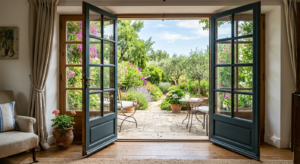
Routine maintenance keeps your doors looking beautiful and functioning properly for many years.
Clean the Glass Regularly
Use a non-abrasive glass cleaner and a soft microfiber cloth to remove fingerprints, dust, and dirt without scratching the surface.
Inspect the Weather Seals
Check weather stripping every few months for cracks or wear. Replacing damaged seals helps prevent drafts and improves energy efficiency.
Lubricate Hinges and Locks
Apply a silicone-based lubricant to hinges, handles, and locking mechanisms once or twice a year to maintain smooth operation.
Protect the Door Frame
Wood frames should be repainted or resealed periodically to protect them from moisture and sunlight. Vinyl, fiberglass, and aluminum frames only require occasional cleaning with mild soap and water.
Check for Moisture Damage
Inspect the bottom of exterior doors after heavy rain. Address any water penetration promptly to avoid structural damage or mold growth.
French Doors Cost Guide
The total cost depends on materials, size, glass type, hardware, and installation.
- Vinyl: $400–$1,200
- Steel: $700–$2,000
- Fiberglass: $800–$3,000
- Wood: $1,200–$5,000+
- Aluminum: $1,000–$4,000
Installation Costs
Professional installation generally ranges from $500 to $1,500, depending on the complexity of the project and any structural modifications required.
Factors That Affect Price
- Door material
- Glass type
- Energy-efficient upgrades
- Custom sizing
- Decorative hardware
- Security features
- Labor costs
- Geographic location
Energy Efficiency & Security
Modern it is designed to provide both comfort and protection.
Look for models that include:
- Double or triple-pane insulated glass
- Low-E glass coatings
- Insulated door cores
- Thermal breaks in metal frames
- High-quality weather stripping
- ENERGY STAR® certification where applicable
Security Features
Today’s French doors are much more secure than older designs.
Important security options include:
- Multi-point locking systems
- Reinforced frames
- Laminated or tempered safety glass
- Heavy-duty hinges
- Smart lock compatibility
- Impact-resistant glass for storm-prone regions
Common Mistakes to Avoid
Many homeowners make avoidable mistakes when purchasing or installing new doors.
- Buying based only on the lowest price
- Choosing the wrong size without professional measurements
- Ignoring local weather conditions
- Overlooking energy-efficiency ratings
- Selecting materials that require more maintenance than expected
- Installing exterior doors without proper sealing
- Forgetting to compare warranties before purchasing
Expert Buying Tips
Before making your final decision, keep these professional recommendations in mind:
- Compare several manufacturers before purchasing.
- Choose materials suited to your local climate.
- Invest in quality locking hardware.
- Prioritize energy-efficient glass.
- Request professional measurements for exterior installations.
- Read the warranty carefully.
- Match the door style with your home’s architecture.
- Think about future maintenance requirements rather than just the initial purchase price.
Final Verdict
French doors continue to be one of the most attractive and practical choices for homeowners seeking to improve both functionality and aesthetics. Their elegant design, generous glass panels, and ability to brighten interiors make them suitable for everything from cozy home offices to expansive patio entrances.
By understanding the different materials, glass options, standard sizes, installation requirements, and maintenance needs, you can confidently choose a model that fits your lifestyle and budget. Paying attention to energy efficiency, security features, and professional installation will ensure you enjoy reliable performance for many years.
FAQs
Q1: What are French doors mainly used for?
Ans: Is it commonly used as patio entrances, garden access points, balcony doors, and elegant room dividers. They maximize natural light while creating an open and stylish appearance.
Q2: Is it energy efficient?
Ans: Yes. Modern models with insulated frames, Low-E glass, and double or triple glazing offer excellent energy efficiency and can help reduce heating and cooling costs.
Q3: Which material is best for a French door?
Ans: Fiberglass is an excellent all-around choice because it combines durability, low maintenance, and strong energy performance. Wood is ideal for premium aesthetics, while steel provides maximum security.
Q6: Can it be used inside a house?
Ans: Absolutely. The interior is popular for home offices, dining rooms, living rooms, and bedrooms because they maintain privacy while allowing natural light to pass through.
Q7: What is the standard size for French doors?
Ans: Most standard models range from 48 to 72 inches wide and 80 inches high, although custom sizes are widely available for unique openings.